
Roofing
Sizing a Dumpster for a Roof Tear-Off in Port Charlotte
Roofing is where sizing goes wrong most often, and in Florida there is an extra trap: tile. Here is how to get it right.
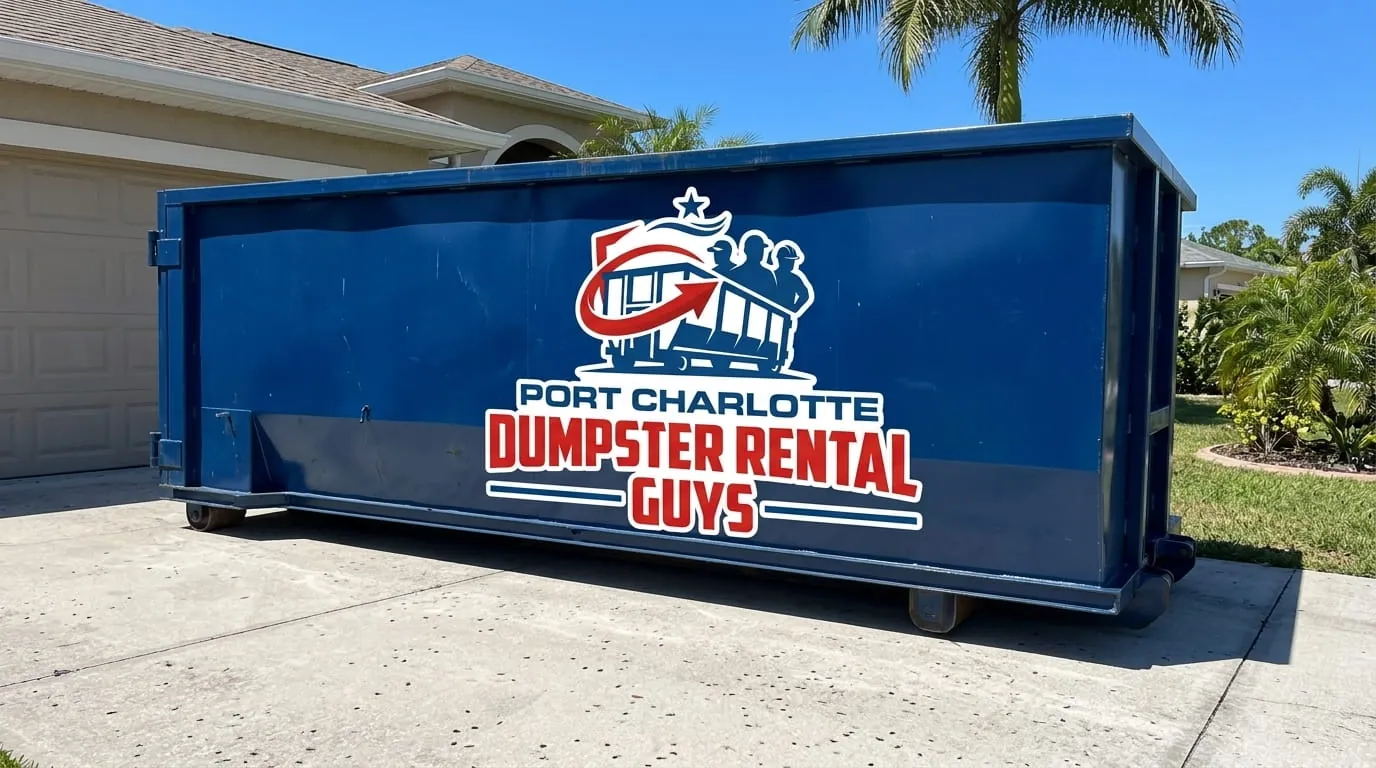
The one number that matters: squares
Roofers measure in squares. One square is 100 square feet of roof surface. A typical Port Charlotte single-storey is somewhere between 20 and 32 squares depending on footprint; the larger houses on the Isles and in Rotonda can run well past 40.
If you do not know your square count, your roofer does, and it is the first thing to ask.
What a square of roofing weighs
| Material | Approx. weight per square | Notes |
|---|---|---|
| Three-tab asphalt shingle | ~200-250 lb | Older, lighter product |
| Architectural asphalt shingle | ~250-400 lb | The current standard |
| Metal panel | ~50-150 lb | Light but very bulky |
| Concrete tile | ~900-1,100 lb | Extremely common here - see below |
| Clay barrel tile | ~600-900 lb | Also common |
| Underlayment and felt | ~15-30 lb | Adds up on a large roof |
| Wet or rotted decking | Double dry weight | Common after storm damage |
Tile is the Florida trap
This is the sizing mistake that costs the most money in this market, and it is worth its own section.
Twelve tons is not a 30 yard container. It is not a 20 yard either. It is several small containers, part-filled, or a properly planned sequence of swaps.
Anyone who puts a 30 yard on a tile tear-off is putting a container on your driveway that cannot legally be hauled once it is full — and you will find that out at the point where it needs to move.
So: if the roof is tile, say so in the first sentence when you call. We size those jobs completely differently, and we would rather plan it than rescue it.
Shingle sizing table
| Roof size | Single layer | Two layers |
|---|---|---|
| Up to 15 squares | 15 yard | 20 yard |
| 15-25 squares | 20 yard | 30 yard |
| 25-35 squares | 20 yard (watch weight) | 30 yard + swap |
| 35-50 squares | 30 yard | 30 yard + swap |
| Over 50 squares | 30 yard + swap | Multiple containers |
Note this table is for shingle only. Tile does not fit this shape at all.
The permit number applies here
A re-roof is permitted work in Charlotte County, which means the debris is construction and demolition debris, which means the landfill will want the building permit number for the job. Without it the load is charged the out-of-county rate.
Your roofer pulls the permit. Ask them for the number and pass it to us when you book — it goes with the load. More on how that works here.
Decking, and what the storm left
Rotten or wet decking. Roofs that leaked in 2022 and were patched rather than replaced often have decking that has been quietly wet ever since. You will not know how much until the old covering is off. Budget headroom.
Secondary water barrier and code upgrades. Florida re-roofs frequently trigger code requirements that were not in place when the original went on. That is your roofer's problem, but it can change the volume of material coming off and going back on.
Wet insulation. Where a leak has run for a long time, saturated insulation may come out too — heavy, bulky and usually mould-affected in this climate.
Season, insurance and the queue
Two rhythms drive roofing demand here and they are worth planning around.
Storm season runs June to November. A significant event puts thousands of roofs into the queue at once, adjusters get overwhelmed, out-of-area crews appear, and every hauler in the region is at capacity. That is exactly what happened after 2022 and the effects lasted for years.
The dry season, roughly December to April, is when most planned re-roofing actually gets done — it is drier, cooler and the seasonal population is here to supervise. Containers get tight in that window too, for happier reasons.
If you are a roofing contractor, a standing arrangement with a local hauler is worth more here than almost anywhere. We hold capacity for contractors who work with us regularly, and during a post-storm crunch we are honest about what we can and cannot deliver.
Placement and site cleanup
- Tight to the drip line on the elevation being torn off.
- Doors facing the approach so ground crew can walk material in.
- Clear of the eaves overhead. The truck bed needs roughly twenty-two feet of vertical clearance to tip.
- On boards — doubled if the driveway is pavers, which many here are.
- Not on the pool deck. It gets asked, and the answer is no.
One thing that is not about the container: a tear-off sheds an enormous quantity of nails. A magnet sweep of the driveway, lawn and street at the end of the job is twenty minutes well spent.
Need a container in Port Charlotte?
Call and describe the job. Three minutes on the phone gets you a size recommendation, a flat rate and a delivery window — and we will tell you if a smaller, cheaper container is the right answer.
Call (941) 206-8052