Rules
What Can and Cannot Go in a Dumpster: The Port Charlotte List
The accepted list is long and boring. The prohibited list is short, strictly enforced, and the reason loads occasionally get turned away. Here is both.
The short version
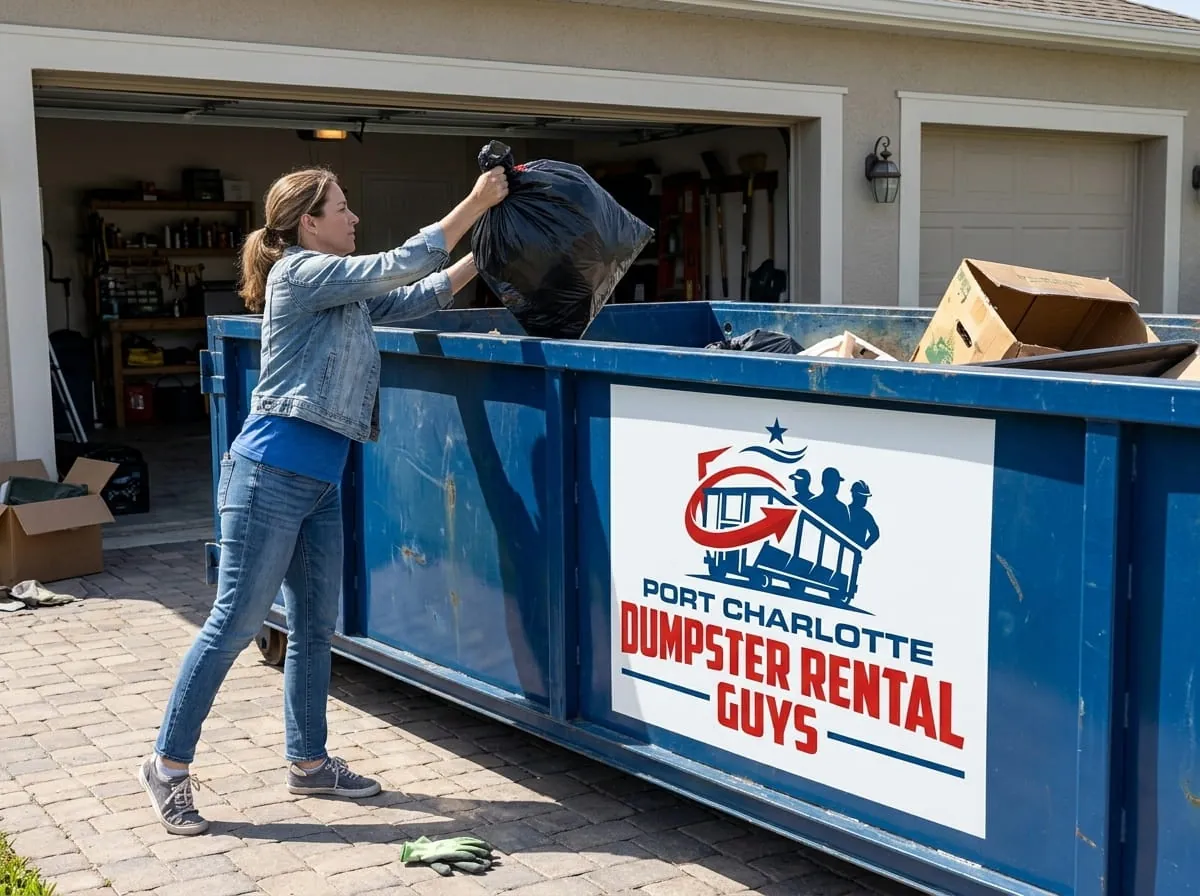
If it came out of a building, a yard or a household and it is solid, non-hazardous and not on fire, it can almost certainly go in the container. If it is liquid, toxic, pressurised, or contains asbestos or refrigerant, it cannot.
That covers about ninety-five percent of questions. The rest of this article is the other five percent, which is where the money and the headaches live.
What you can put in
Household and furniture
Sofas, armchairs, beds, mattresses and box springs, tables, wardrobes, bookcases, desks, carpets, rugs, curtains, clothing, linens, toys, books, paperwork, kitchenware, patio furniture, grills with the propane tank removed, exercise equipment and general clutter. No mattress surcharge on our containers.
Construction and renovation debris
Drywall, timber, plywood and sheet goods, doors, windows, trim, kitchen cabinets, countertops, tiling, laminate and vinyl flooring, insulation, siding, soffit and fascia, guttering, fencing, deck timber and general non-hazardous building material.
Lanai and pool cage material
Aluminium framing, screen, vinyl panels and the fixings. Very common here, very bulky, almost weightless — and the aluminium is worth separating if there is a real quantity.
Roofing
Asphalt shingle, metal panels, tile, felt and synthetic underlayment, flashing, drip edge and roof decking. Weight is the constraint, not acceptability — and concrete or clay tile is very heavy.
Heavy and inert material
Concrete, block, stucco, brick, pavers, stone, rubble and tile. All fine, all heavy — these belong in a 10 yard.
Scrap metal
Ductwork, conduit, steel studs, railings, aluminium and fencing. Worth separating if there is enough of it.
What is prohibited
- Liquids of any kind — paint, stains, varnish, thinners, solvents, oils and fuels
- Asbestos-containing material — common in pre-1980 floor tile and mastic. Licensed abatement only, and it goes to the landfill under its own separate arrangements
- Tyres
- Batteries of any kind
- Propane, gas and pressurised cylinders, including "empty" ones. A very common find in Florida garages
- Refrigerant-charged equipment that has not been professionally evacuated — fridges, freezers, window units and the outdoor half of a split system
- Pesticides, herbicides, pool chemicals and fertiliser
- Medical and infectious waste, including sharps
- Hot ashes or anything smouldering
- Contaminated soil
- Electronics at volume — the county collects e-waste by request instead
Clean debris: the free category worth knowing
Genuinely useful, and almost nobody outside the trade knows about it.
The catch is that it has to be clean. Not mixed with timber, drywall, plastic or general debris. And the landfill charges $50 for dumping in the wrong area, so this is a category to get right rather than to chance.
What it means practically: if you are taking out a paver driveway, a tile floor or a patio slab and you can keep that material genuinely separate, the disposal cost of that stream drops to nothing. On a big hardscape job that is worth real money, and it is exactly the sort of thing worth mentioning when you call.
The grey areas people ask about
Paint cans
Liquid paint is prohibited. Dried-out latex paint is generally acceptable — open the can and let it harden, with cat litter or sand to speed it up. Oil-based paint is hazardous whether wet or dry, and the county runs a Chemical Reuse Shop that will take usable product.
Pool chemicals
Never in a container. Chlorine and acid are genuinely dangerous mixed with anything else, and they are household hazardous waste. The county takes them, and HHW does not count against your twelve free visits.
Air conditioning units
Every Florida house has one and they fail. Both halves contain or contacted refrigerant, so the system needs professional evacuation before disposal.
Treated timber
Acceptable in a mixed load, not in a clean-wood container. Dock, fence and deck timber here is nearly always treated.
Palm fronds and yard waste
Acceptable in a mixed container, though for ordinary volumes the county curbside yard waste service is cheaper. For a big clearance a container makes sense.
Where the rest has to go
| Material | Where it goes |
|---|---|
| Paint, solvents, pool and garden chemicals | County household hazardous waste - does not count against your 12 free visits |
| Usable leftover chemicals | The Chemical Reuse Shop at the Mid County facility |
| Motor oil and filters | Curbside on your service day, 5 ft from the cart, in a transparent screw-lid container |
| Lead-acid batteries | Curbside if not leaking, on your service day |
| Tyres | Six passenger tyres per year curbside |
| Electronics | Curbside by request - book 2 days before your service day |
| Appliances and furniture | Curbside by request, at the edge of the right of way |
| Usable household goods | The C.A.R.E. Reuse Stores at both Mini-Transfer facilities |
| Asbestos | Licensed abatement contractor only |
Illegal dumping is taken seriously here
Worth stating plainly, because the county has been explicit about it.
Contractors are not permitted to dump construction and demolition debris in the right of way. Tree trimming and removal companies are not permitted to dump vegetative debris in the right of way.
If someone quotes you a suspiciously cheap price for a clearance and is vague about where the material is going, that is worth a second thought. It is your property the debris came from.
A pre-load checklist
- Walk the pile and pull out anything liquid, pressurised or chemical
- Check the garage for propane cylinders and pool chemicals
- Set aside electronics for the by-request curbside collection
- Check any appliance with a compressor for refrigerant
- If the building predates 1980 and you are disturbing floor tile or mastic, stop and get it tested
- Keep clean tile, dirt, gravel and small concrete separate — that stream is free
- Set aside aluminium if there is a screen cage in the job
- Load flat and heavy first, bulky on top, and stop at the rail
Need a container in Port Charlotte?
Call and describe the job. Three minutes on the phone gets you a size recommendation, a flat rate and a delivery window — and we will tell you if a smaller, cheaper container is the right answer.
Call (941) 206-8052